팬텀 마운틴 Phantom Mountain
2026
English curatorial text below ↓
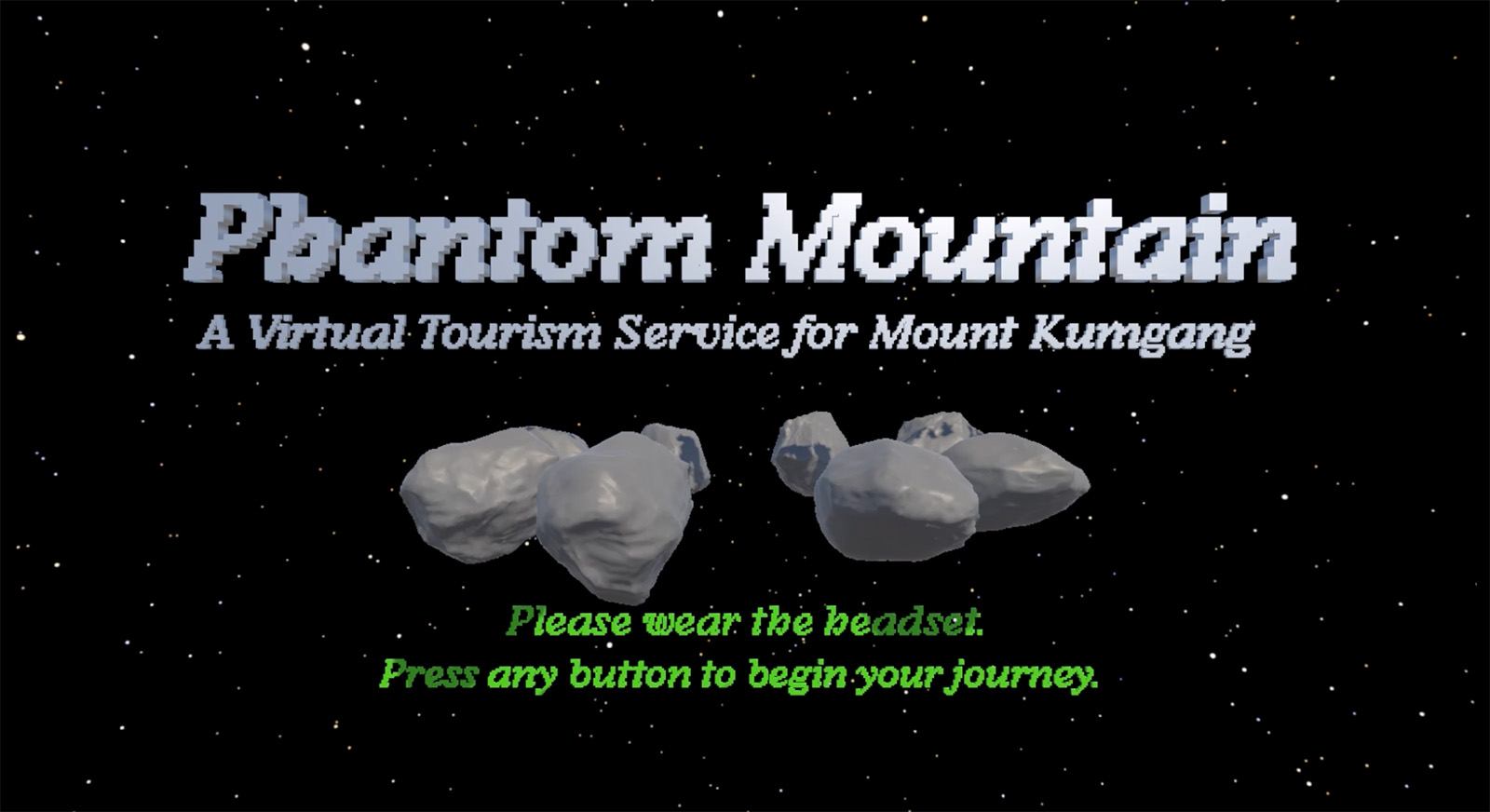
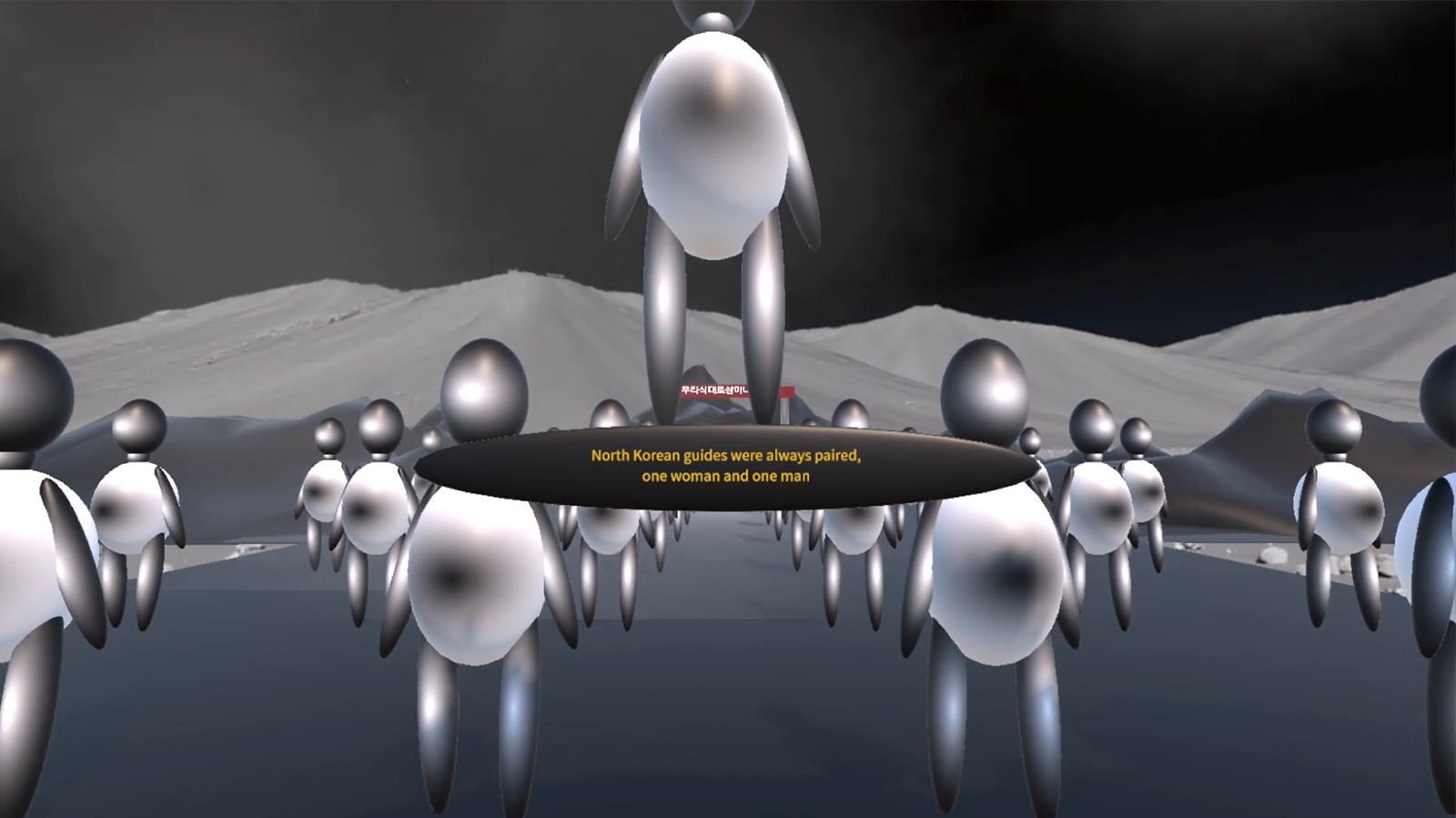
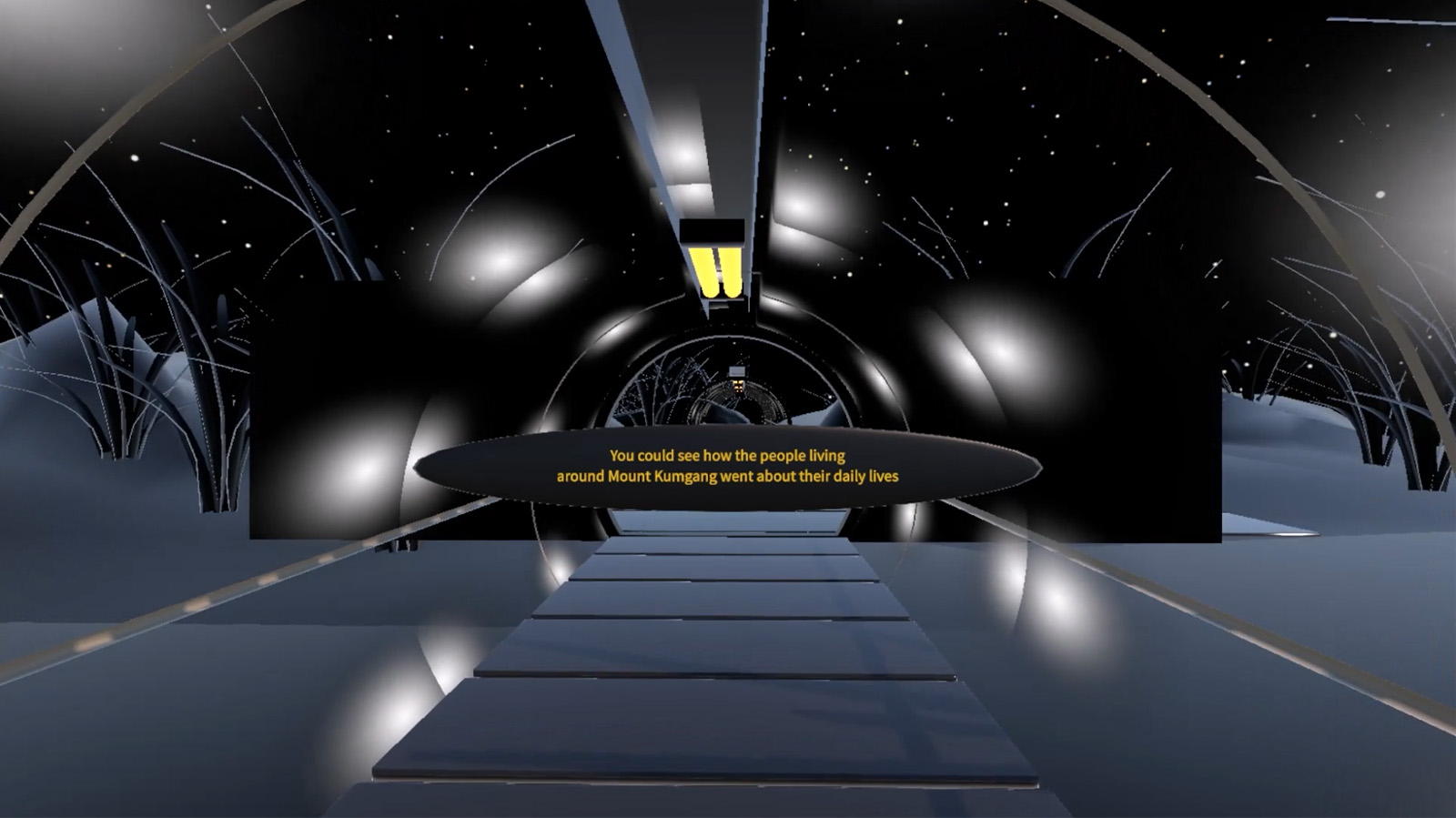
Phantom Mountain, VR installation, 42 min 42 sec
어떤 여행은 역사적 사건이 된다. 1989년 8월, 헝가리와 오스트리아 국경에서 ‘범유럽 피크닉’이라는 이름의 행사가 열렸다. 국경의 문이 잠시 열렸고 그 틈으로 수백 명의 동독인이 서쪽으로 넘어갔다. 소풍으로 기획된 하루가 석 달 뒤 베를린 장벽의 붕괴로 이어지는 연쇄의 첫 고리가 된 것이다.
그런데 관광은 여행과는 사뭇 다르다는 점을 기억할 필요가 있다. 여행이 이동하는 개인의 것이라면, 관광은 그 이동을 상품으로 조직하고 동선과 시간을 관리하는 산업이자 정책이다. ‘금강산 여행’이 아니라 ‘금강산 관광’이라 불렸다는 사실은 그래서 의미심장하다. 그것은 개인의 결심이 아니라 하나의 사업/정책이었고, 그랬기 때문에 국가와 자본과 군대가 동시에 개입할 수 있었다.
한반도 분단 역사에서 하나의 사건이었던 금강산 관광은 1998년 11월 18일 시작됐다. 실향민을 포함한 826명을 태운 관광선 금강호가 동해항을 떠나 북한 장전항에 닿았다. 2003년에는 육로가 열려 버스가 군사분계선을 넘었고, 수많은 수학여행과 효도관광이 그 뒤를 이었다. 2008년 7월 11일 관광객 박왕자 씨가 북한군의 총격으로 사망하면서 이튿날 관광은 중단됐다. 그때까지 금강산에 다녀온 남한 사람은 195만 5,951명이었다. 열려 있던 기간은 채 10년이 되지 않는다.
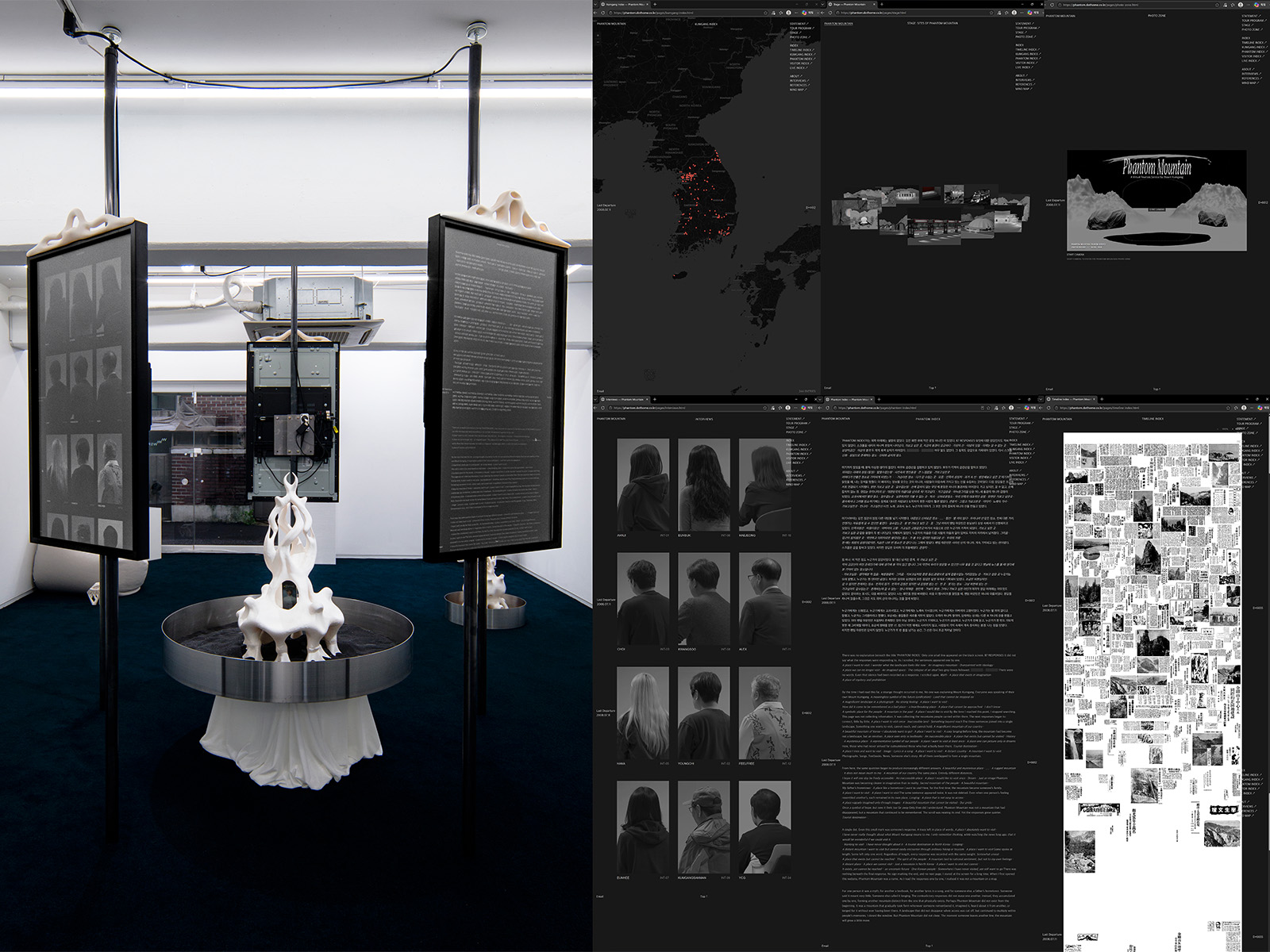
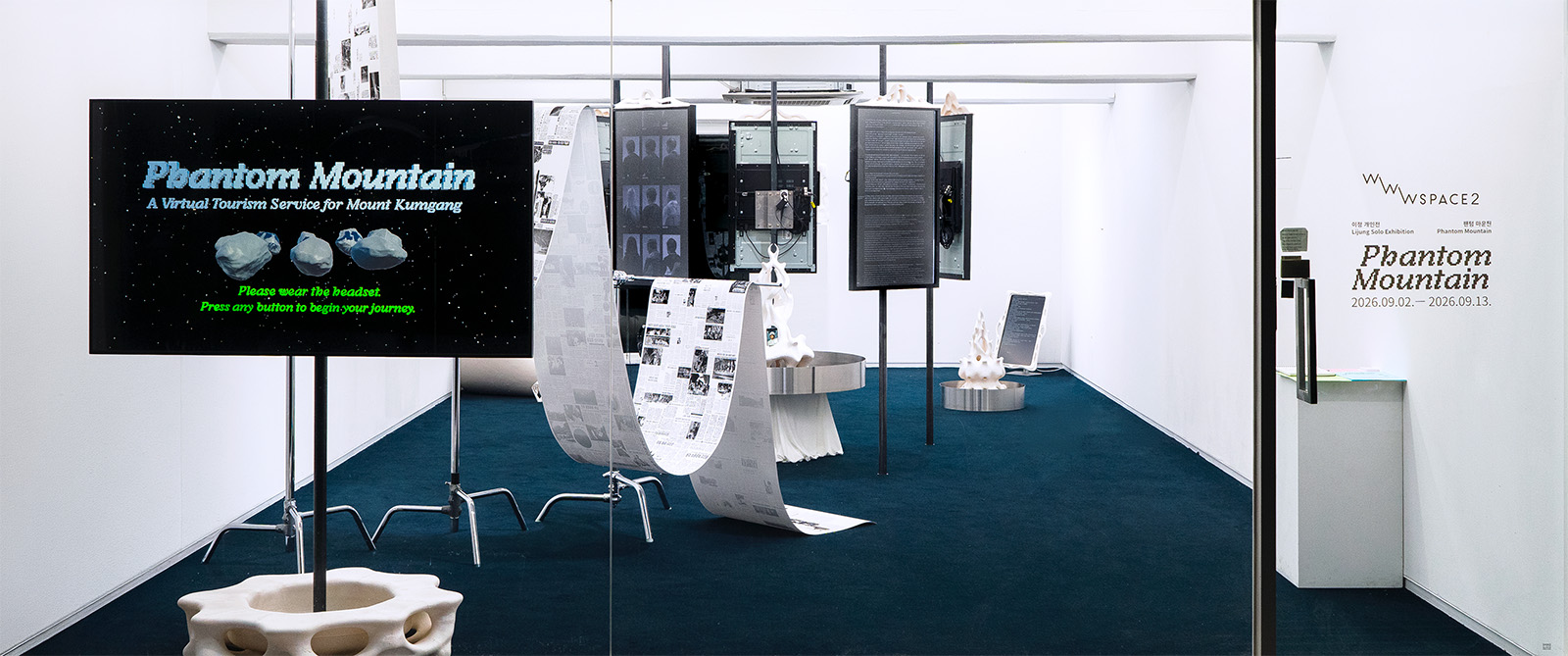
Installation view of Lijung’s solo exhibition, WWWSPACE2, 2026, Photo: Soonyoung Jung,
Phantom Mountain Online Archive — Interviews, Phantom Index, Kumgang Index, Stage, Timeline Index, Photo Zone, Online Webpage, 2026 Website
북녘땅에서 일어난 이 찰나의 열림은 한국 사회에 무수한 진동을 만들어 냈다. 2004년 금강산에 다녀온 한 시민기자의 문장은 감출 수 없는 시대의 흥분을 드러낸다. “우리는 지금 통일시대에 살고 있다.” 같은 글에는 북측 여성 안내원과 남한 청년 사이에 오간 농담이 ‘사랑 이야기’라는 낭만적인 제목으로 기록되어 있다. 많은 남한 관광객에게 그 길은 한민족의 오랜 염원을 마주하며 가슴이 뜨거워지는 경험이었으며, 실향민에게는 조금이라도 고향에 가까워져 보겠다는 귀소본능이었고, 정부 관계자와 사업자에게는 “통일 대박”의 전초전과 같은 사업이었다.
잠깐의 틈으로 거짓말같이 열렸던 이 관광은 이제 갈 수 없게 되었기 때문에 한국 사회에서 더욱 신화가 되어간다. 팔선녀가 목욕을 하고 갔다는 오래된 설화, 북한 안내원과 남한 관광객의 이루지 못한 사랑, 기록으로 남은 사건들이 하나의 이름 위에 겹겹이 쌓인다. 작가 이정은 이 신화를 마주하며 그것을 복원하는 대신 더 증폭해 보기로 결심한 듯하다.
《팬텀 마운틴》은 작가 이정과 필자의 두 번째 협업이다. 지난해 《DMZ에 땅을 사는 사람들》에서 우리는 접근이 불가능한 비무장지대의 토지가 실제로 거래되는 현상을 다뤘다. 당시 이정은 〈8 Lands, 8 Keepers〉에서 온라인 부동산 플랫폼에 올라온 DMZ 매물의 소개 글을 채집했다. 명당, 조상의 땅, 언젠가 다시 돌아올 길 같은 과잉된 언어가 결코 밟을 수 없는 땅을 대신하고 있었고, 작가는 그 언어에 스민 연민과 기다림의 결을 단서로 ‘키퍼’라는 존재를 상상해 형상과 물질성을 부여했다. 땅에 얽힌 정동과 잔류하는 감정이 그 작업의 대상이었다면, 이번에는 역사적 사건으로서의 관광 상품이 그 자리에 놓인다.
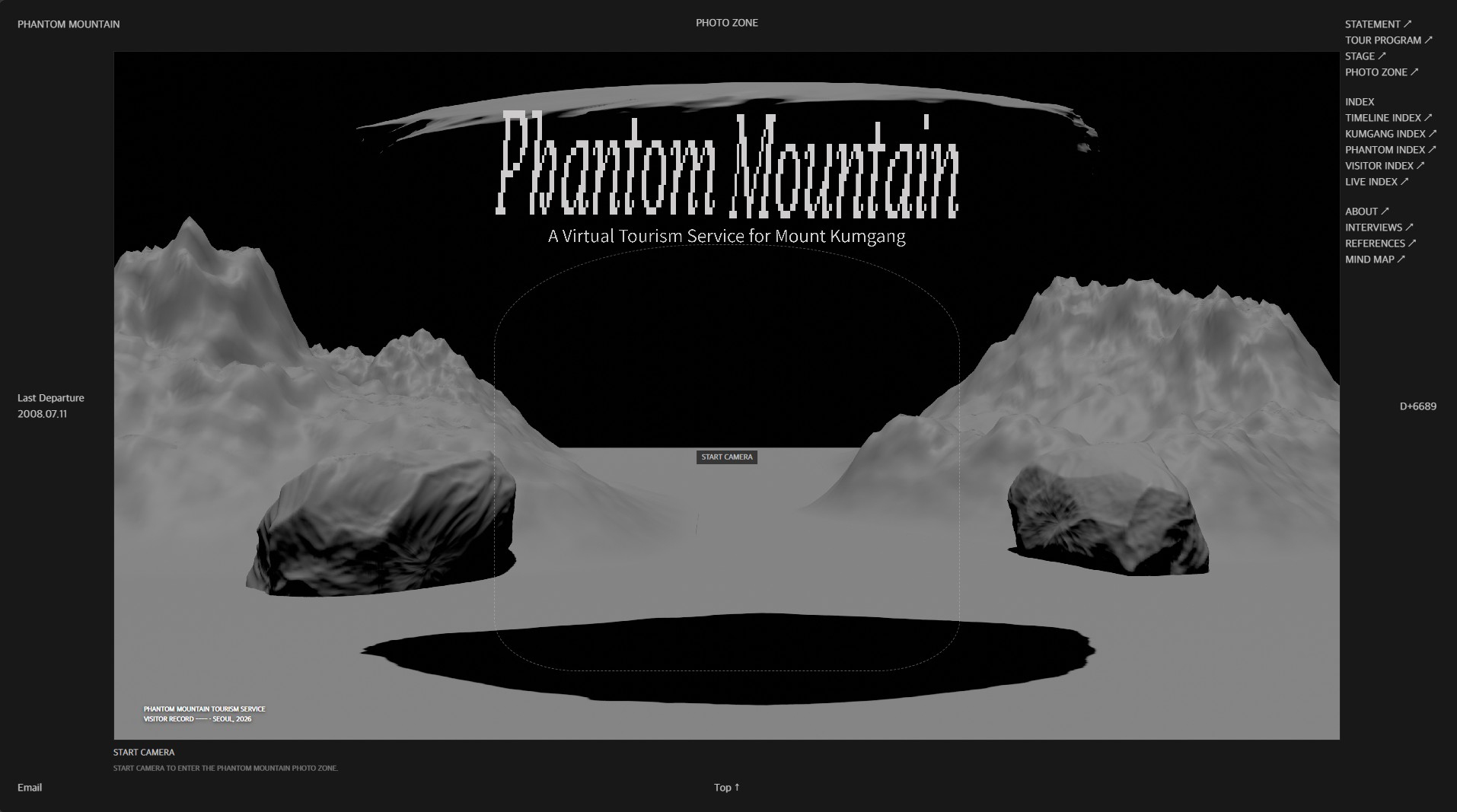
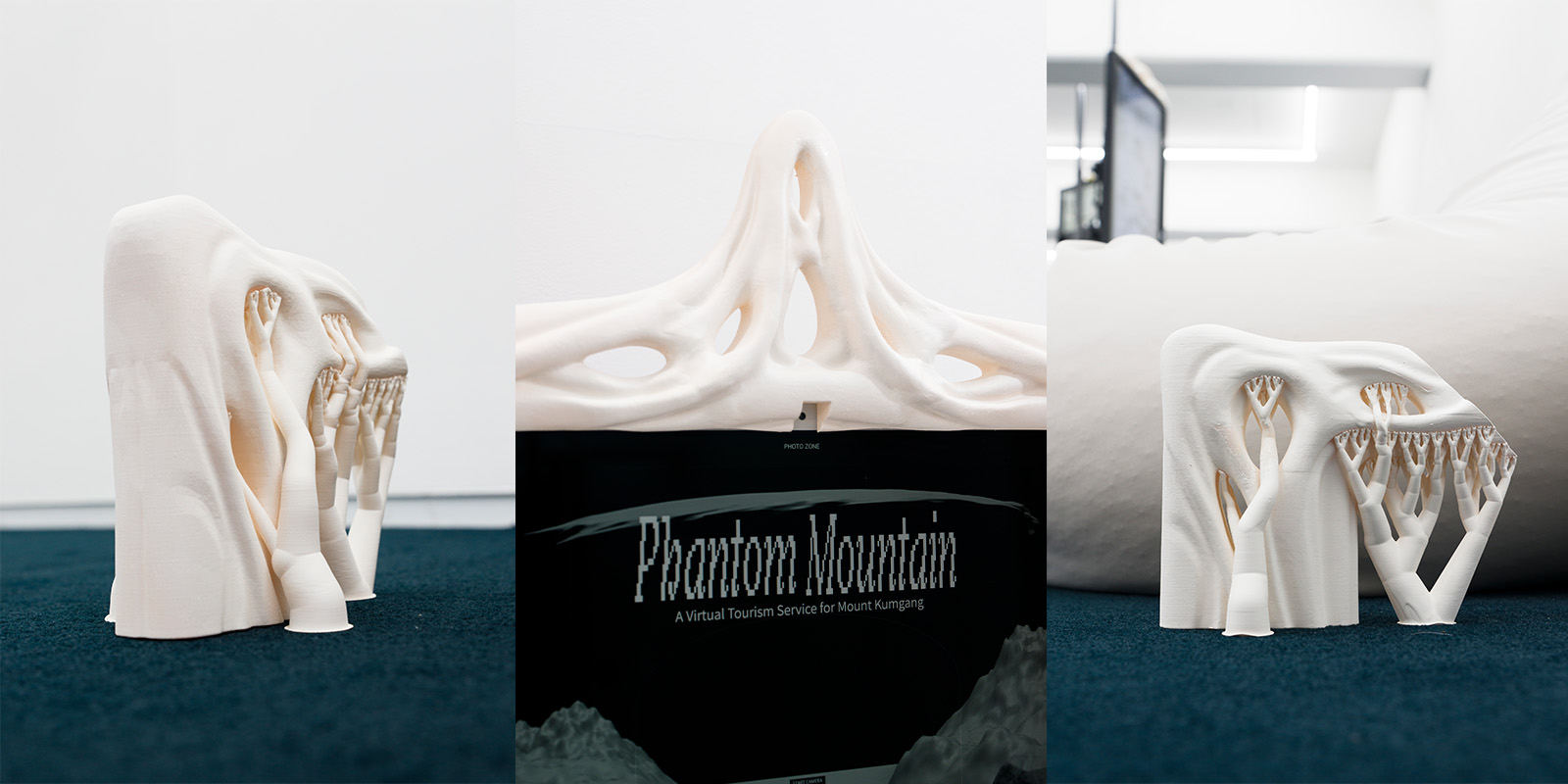
Phantom Mountain Online Archive : Photo Zone , Online Webpage, 2026Website
이정은 계속해서 사람들을 만나고 이야기를 수집해 왔다. 《Korean Ghost》(2022)에서 두 조모와 부모의 내러티브를 통해 한국전쟁 세대의 기억이 3세대에게 전승되는 경로를 추적했고, 《Kishin: The Generation of Postmemory》(2023)와 《Casper》(2025)로 그 작업을 이어왔다. 세대마다 분단의 경험은 다르다. 필자가 보기에 포스트메모리 세대가 북한을 다루는 한 가지 특징은 이들이 북한을 점차 가상으로, 픽션으로 다룬다는 것인데, 이정은 그 중심에 있다. 1980년대 후반에 태어난 작가와 그 세대는 주로 북한을 간접적인 매체를 통해서만 접해왔다. 가족 내에서 전승되는 실향의 트라우마, 쉬쉬하며 오가던 괴담, 뉴스와 영화와 드라마와 게임의 이미지. 공식적인 기억과 사적인 기억이 교차하며 만들어낸 가상의 이미지로서 말이다.
《팬텀 마운틴》에서 이정은 이 역사적 사건에 대하여 이루어지는 가상화를 가속화한다. 전시의 물리적·개념적 중심이 되는 동명의 신작을 VR 매체로 제작한 데서 그 태도가 잘 드러난다. 작가가 이 프로젝트에서 시도하는 가상화는 80년대 후반 세대가 무의식적으로 내면에 구축한 북한 이미지의 형성 매커니즘에 대한 모방으로도 읽을 수 있을 것이다.
또한, 작가는 이것을 관광이라는 형식과 결합한다. 관광은 현대 자본주의 사회에서 기억을 가상화하는 대표적인 구조화 방식이다. 말하자면, 금강산 관광은 이 전시의 내용인 동시에 전시의 구조가 된다. 즉, 그것은 갈 수 없는 장소를 기억하는 방식 (조금 더 한반도 특정적으로 말하자면) 남한 사회가 북한을 재현하는 방식과 그것의 가상성을 논하기에 가장 좋은 사례이면서, 동시에 그 기억과 역사를 다시 한번 전시라는 형식으로 가상화하기 위한 구조적 방법론인 것이다. 그리하여 이 전시는 기억에 대한 기억, 즉 포스트메모리 그 자체의 형식을 취한다. 관객이 관람객이 아니라 관광객으로 호명되어 참여하게 되는 이유도 여기에 있다.
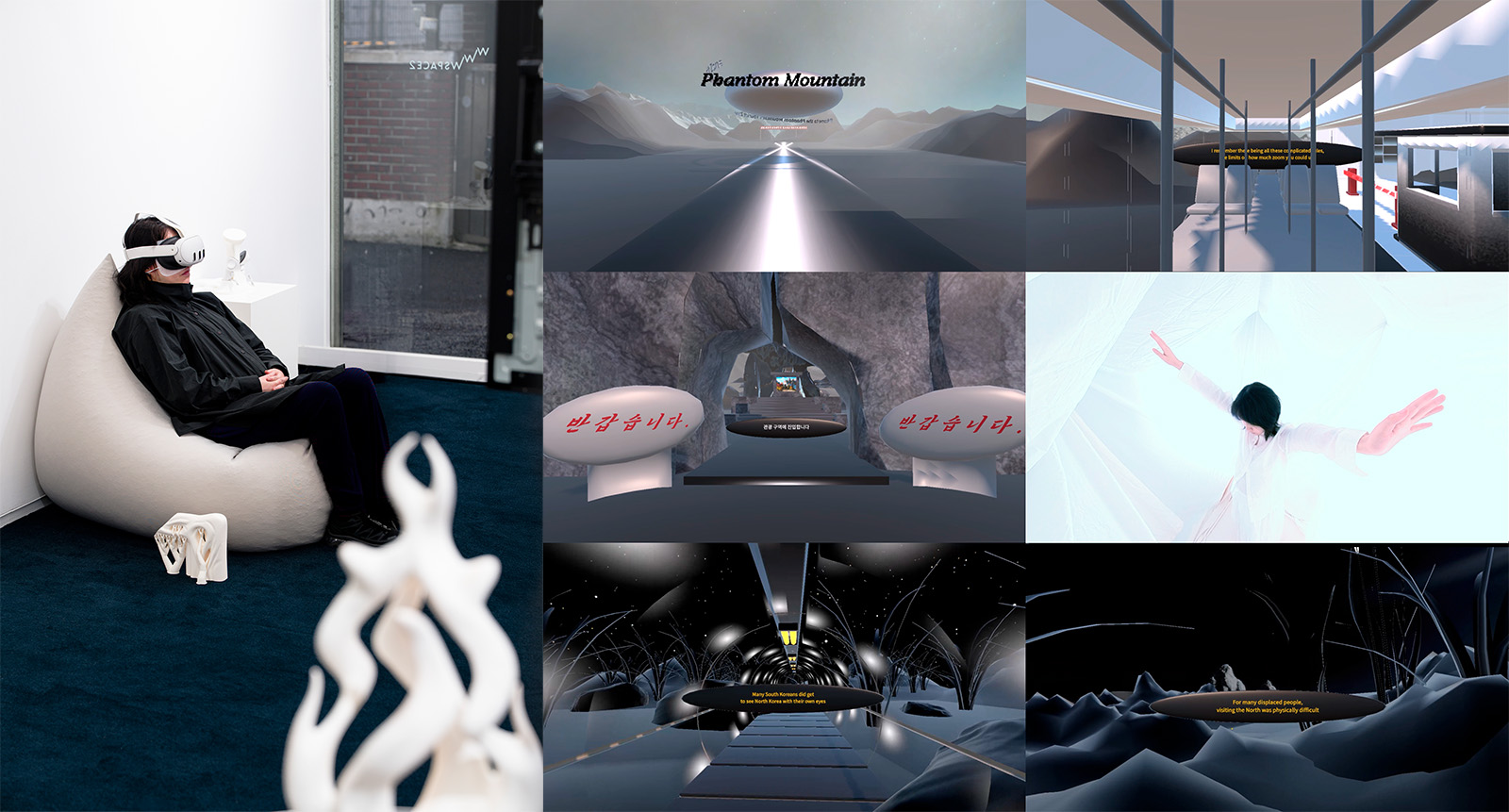
Installation view of Lijung’s solo exhibition, WWWSPACE2, 2026, Photo: Soonyoung Jung,
Phantom Mountain, VR installation, 42 min 42 sec
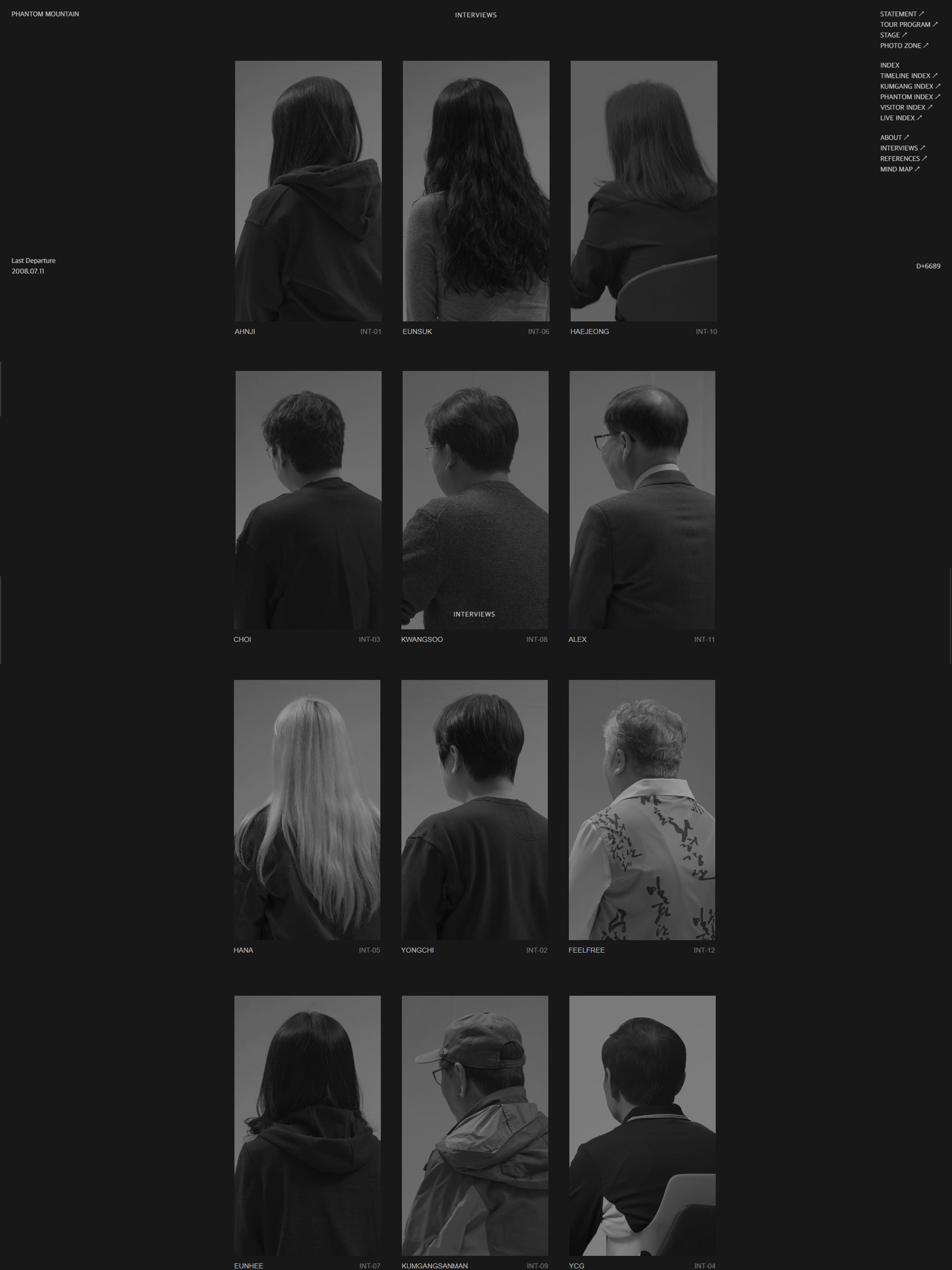
Phantom Mountain Online Archive : Interview , Online Webpage, 2026Website
늘 그렇듯, 가상은 실재에 기반해 만들어진다. 본 전시가 기반한 실재의 한 축은 인터뷰다. 사람의 들려주는 뒷이야기나 대면으로 채록한 증언이 그것이다. 뒷모습으로 진행되는 인터뷰가 상징하는 익명성은 사람들로 하여금 더 내밀한 이야기를 꺼낼 수 있게 한다. 인터뷰는 이정의 작품 세계를 관통하는 매우 중요한 접근 방식이기도 하다. 다른 한 축은 공식적으로 기록된 역사적 아카이브다. 이정은 〈Timeline Index〉(2026)에서 과거부터 현재까지 금강산과 관련된 기사를 수집하고, 시대마다 달라지는 금강산에 대한 언어의 온도를 추적했다. 노스탤지어의 언어가 군사 분쟁의 언어로 바뀌고 이윽고 언급 자체가 줄어드는 궤적이 물질화되어 전시장에 걸린다. 이를 통해 작가는 이 아카이브를 동시대 사람들의 기억과 연결한다. 실제로 다녀온 사람들의 구술 기억, 관광 개발과 운영을 맡았던 정부/기업 관계자들의 후일담, 금강산이 고향인 북향민의 기억, 금강산에 가 본 적 없는 사람들의 상상이 같은 층위에서 포개진다. 상상과 실재를 가로지르는 그야말로 복수의 풍경인 것이다.
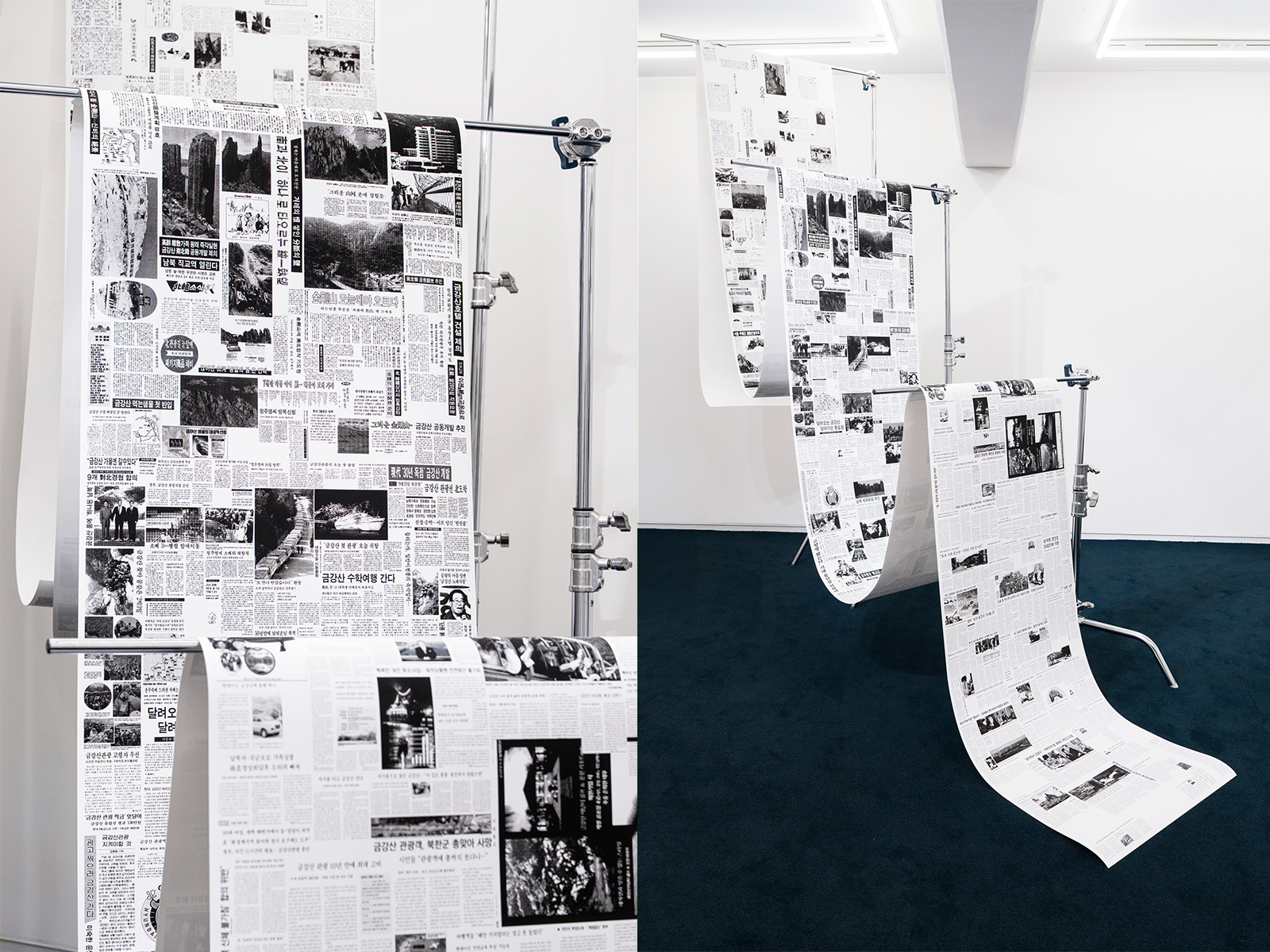
Installation view of Lijung’s solo exhibition, WWWSPACE2, 2026, Photo: Soonyoung Jung,
Phantom Mountain: Timelin, digital print, 600x8650mm, 2026
이 실제 역사를 가상의 풍경으로 치환하는 매체가 VR이다. 실재하지 않는 장소를 경험하게 한다는 점에서, 사람들의 기억을 가상의 장소로 재구성한다는 점에서, 그리고 경험하지 않은 것을 경험으로 등록한다는 점에서 VR이라는 매체는 북한이 남한 사회에서 점차 가상화 되어가는 상황을 암시한다. 흥미로운 것은 이정이 이러한 가상화가 수반하는 형언하기 힘든 뒤틀림과 기묘함을 특유의 방식으로 포착해 낸다는 점이다. 이는 인터넷에 떠도는 ‘리미널 스페이스 밈’과도 같은 VR 작품 속 인공적인 풍경, (실제 금강산 관광이 그렇듯) 통제되는 신체로부터 오는 생경한 감각, 더불어 전시장 곳곳에서 마주하는 과도한 기술적 매끈함 등으로 현현한다. 가령, 인공지능으로 생성된 것처럼 보이는 여성 관광 안내원은 남성의 음성으로 끊임없이 앵무새처럼 안내 방송을 한다. 그 여성 안내원이 구사하는 것은 완벽한 북미 백인 남성의 영어다. 전시의 내용과 전달을 매개하는 주요 언어가 영어라는 사실도 의미심장하다. 이 분단의 시작과 휴전, 그리고 현재의 상태까지도 미국의 강력한 영향 아래 있다는 사실을 떠올리게 한다.
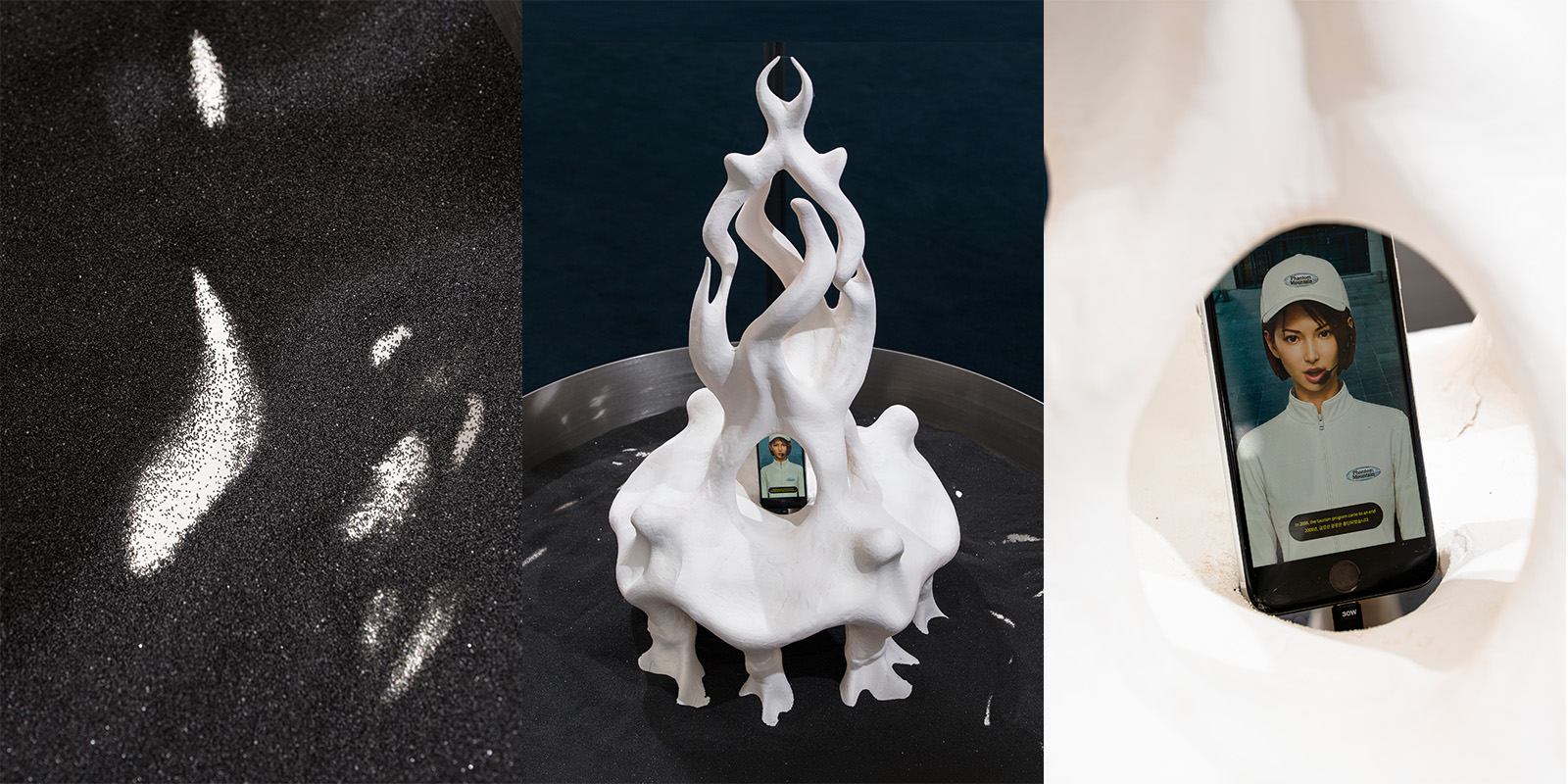
Phantom Mountain_Welcome Station 2, mixed-media installation, video (2 min 5 sec loop), variable, 2026
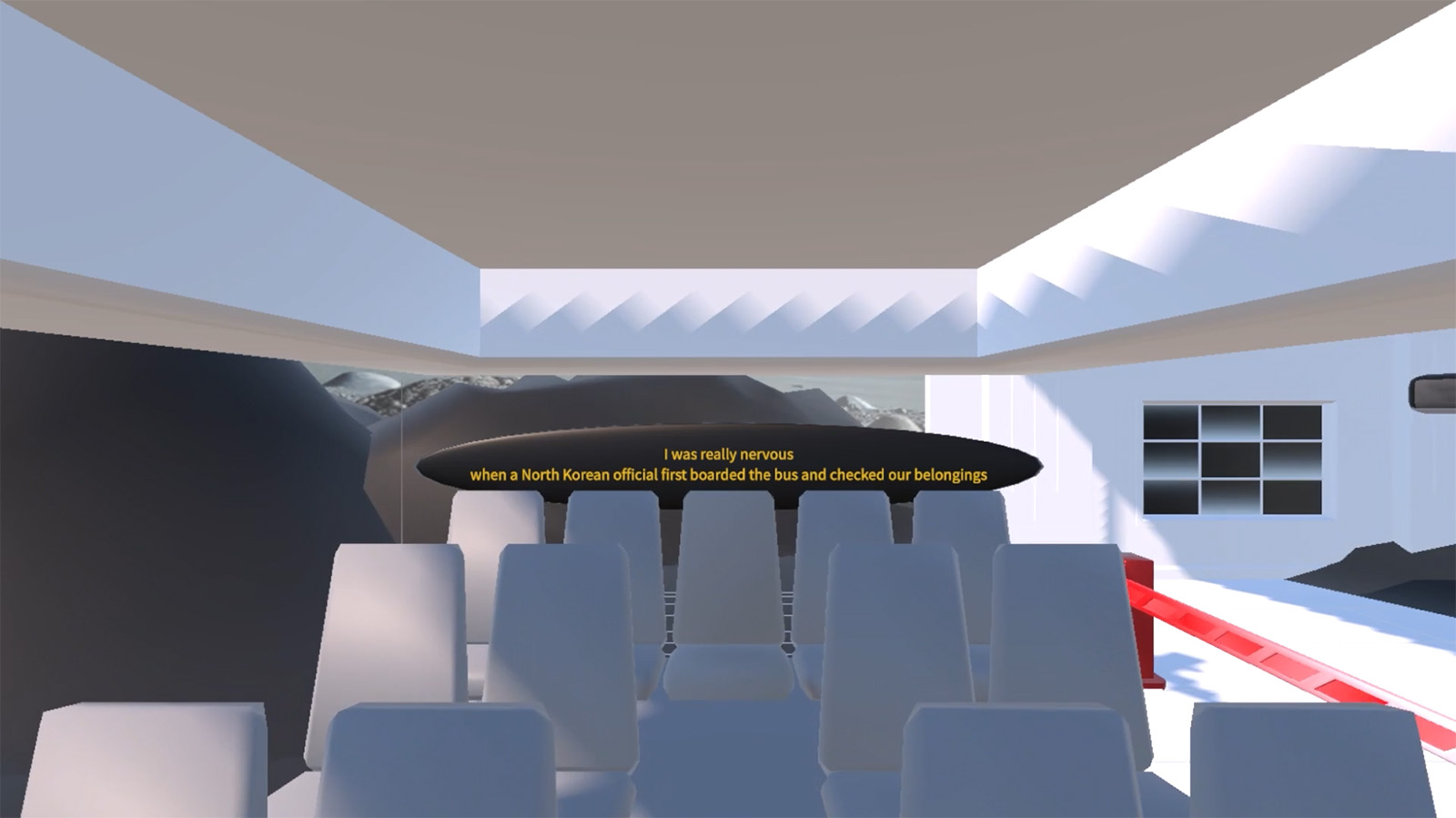
Phantom Mountain, VR installation, 42 min 42 sec
무엇보다 이러한 뒤틀림의 근원은 아마도 한국 사회가 분단이라는 구조에, 북한이라는 대상에 투사해 온 욕망 자체에 있을 것이다. 그것에는 역사와 신화, 소문과 경제적 기대, 그리움과 후회가 복합적으로 얽혀 있다. 배우는 없고 관객만 있는 거대한 기억의 극장, 이는 그 자체로 분단 구조와, 역사에 대한 기존 세대의 기억과 다음 세대의 태도, 북한을 향한 복합적인 시선이 뒤틀리며 형성한 무의식적 이미지를 반영한다.
한편, 남한인으로서 필자가 느끼는 이 단절을 한층 더 기묘하게 만드는 또 하나의 출처는 여전히 다른 곳에서는 이루어지고 있는 북한과의 일상적 연결이었다. 단둥에서 본 하나의 다리를 오가며 진행되는 북중 무역이 그러했고, 재일조선인학교 학생들이 올해도 졸업 여행으로 북한을 간다는 사실이 그러했다. 연결이 너무나도 아무렇지 않게, 일상적으로, 자주 일어난다는 점에서 더 기묘했다. 그 앞에서 남한이 섬이라는 것을, 그리고 물리적 연결이 가능케 했을 무수한 가능성들을 소름 끼치게 깨달았던 순간들이 있었다.
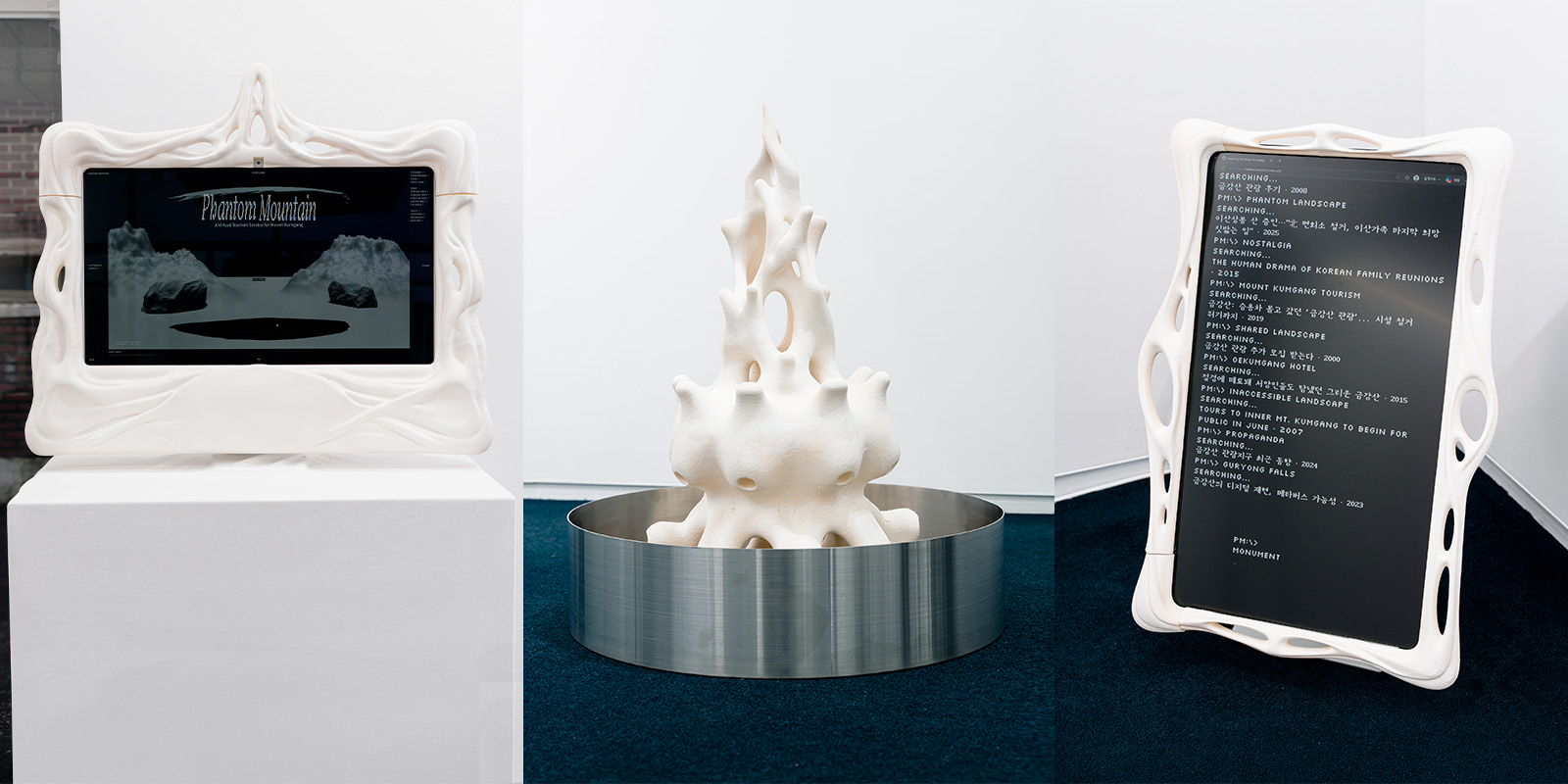
Installation view of Phantom Mountain: Photo Zone, mixed-media installation, variable dimensions, 2026, Phantom Mountain: Objects of Welcome, mixed-media installation, variable diemensions, 2026, Installation view of Phantom Mountain: Live index, mixed-media installation, variable dimensions, 2026
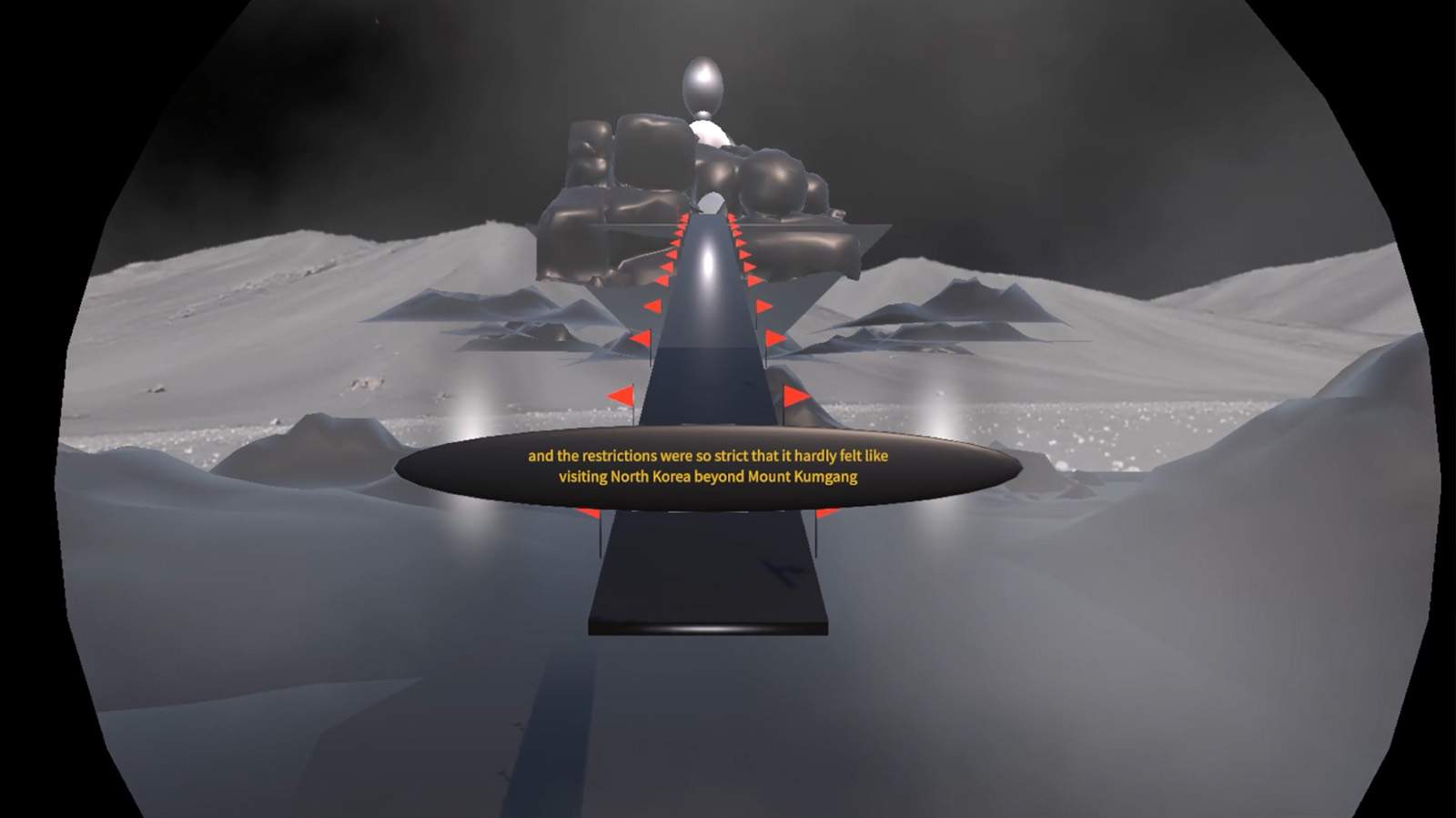
Phantom Mountain, VR installation, 42 min 42 sec
Installation view of Lijung’s solo exhibition, WWWSPACE2, 2026, Photo: Soonyoung Jung
그리하여 이정이 보이고자 하는 것은 섬에서 만들어진 가상의 산이라 할 수 있을 것이다. 《팬텀 마운틴》이 상연하는 이 가상의 산은 실제 금강산의 대체물이 아니라, 닿을 수 없게 된 장소를 향해 남한 사회가 보내온 시선의 응결에 가깝다. 이 전시는 그저 그 산이 어떻게 기억되고, 상상되고, 계산되고, 끝내 픽션이 되어 가고 있는지를 현재형으로 드러낼 뿐이다. 배우가 없는 극장에서 관객은 결국 자기 자신을 마주하게 된다. 관광객으로 호명되어 여섯 개의 구간을 통과하고 헤드셋을 벗었을 때 방금 다녀온 곳이 어디였는지 묻게 된다면, 이 전시로서는 그것으로 충분하다. 우리가 ‘금강산’이라고 부를 때 그것은 실제로 무엇을 가리키는가? 이 물음은 한 장소에 대한 것이 아니라 그 장소를 향한 욕망이 무엇으로 만들어져 있었는지에 대한 것이며, 그 욕망이 지금 우리에게 어떤 미래를 기다리게 하고 동시에 어떤 미래를 유예하게 하는지에 대한 것이다.
서문: 섬에서 만들어진 가상의 산
이혜원 (독립 큐레이터)
Exhibition Credits
Organized and presented by Lijung
Curator: Hyewon Lee
Director of Photography & Performance: Soonyoung Jung
Music & Performance: Eunsil Noh
Design: Jeongbalsan
Installation: Miji Art
Supported by Seoul Metropolitan Government and Seoul Foundation for Arts and Culture
Exhibition Statement: A Virtual Mountain Made on an Island
Hyewon Lee
Some travels become historical events. In August 1989, an event known as the “Pan-European Picnic” was held on the border between Hungary and Austria. The border was temporarily opened, and through that brief opening, hundreds of East Germans crossed into the West. A day conceived as a picnic became the first link in a chain of events that would lead, three months later, to the fall of the Berlin Wall.¹
It is worth remembering, however, that tourism is quite different from travel. If travel belongs to the individual who moves, tourism is an industry and a policy that organizes that movement as a commodity, managing routes and time. It is therefore significant that it was called “Mount Kumgang tourism,” rather than “travel to Mount Kumgang.” It was not an individual decision but a business and a policy, and for that very reason, the state, capital, and the military could all intervene at once.
Mount Kumgang tourism, itself an event in the history of the division of the Korean Peninsula, began on November 18, 1998. The cruise ship Kumgang, carrying 826 passengers, including displaced people from the North, departed from Donghae Port and arrived at Jangjon Port in North Korea. In 2003, an overland route opened, allowing buses to cross the Military Demarcation Line, followed by countless school excursions and tours for elderly parents. On July 11, 2008, a tourist, Park Wang-ja, was shot and killed by a North Korean soldier, and tourism was suspended the following day. By then, 1,955,951 South Koreans had visited Mount Kumgang.² The window had remained open for less than ten years.
This fleeting opening onto the northern half of the peninsula produced countless reverberations throughout South Korean society. A sentence written by a citizen journalist who visited Mount Kumgang in 2004 reveals the unmistakable excitement of the time: “We are now living in an era of reunification.”³ The same account records an exchange of jokes between a North Korean female guide and a young South Korean man under the romantic title of a “love story.”⁴ For many South Korean tourists, the journey was an emotionally charged encounter with a long-held aspiration for national reunification; for displaced people, it was an instinctive desire to draw even slightly closer to their hometowns; and for government officials and business operators, it was a venture imagined as a prelude to a “reunification jackpot.”
This tourism project, which opened almost unbelievably through a brief gap, has become all the more mythologized in South Korean society now that the destination is once again inaccessible. An old legend of eight celestial maidens bathing in the mountain’s waters, an unrealized romance between a North Korean guide and a South Korean tourist, and incidents preserved in historical records accumulate layer upon layer under a single name. Confronting this mythology, the artist Lijung seems to have decided not to restore it, but rather to amplify it.
Phantom Mountain is the second collaboration between Lijung and myself. Last year, in People Buying Land in the DMZ,⁵ we examined the phenomenon of land within the inaccessible Demilitarized Zone being bought and sold in reality. In 8 Lands, 8 Keepers, Lijung collected descriptions of DMZ properties listed on online real-estate platforms. Excessive language—auspicious sites, ancestral land, roads that one day might lead home again—stood in for land that could never actually be stepped upon. Taking as clues the compassion and anticipation embedded in these words, the artist imagined beings she called “keepers,” giving them form and material presence. If that work focused on the affects attached to land and the emotions that linger there, this time a tourism product as a historical event occupies that position.
Lijung has continually met people and collected their stories. In Korean Ghost (2022),⁶ she traced the routes through which memories of the Korean War generation are transmitted to the third generation through the narratives of her two grandmothers and her parents, continuing this inquiry through Kishin: The Generation of Postmemory (2023) and Casper (2025). Each generation experiences division differently. From my perspective, one characteristic of the postmemory generation’s engagement with North Korea is its increasing treatment of the North as something virtual, as fiction—and Lijung stands at the center of this tendency. Born in the late 1980s, the artist and her generation have encountered North Korea largely through indirect media: the trauma of displacement transmitted within families, whispered rumors and ghost stories, and images from news reports, films, television dramas, and games. North Korea emerges, in other words, as a virtual image produced at the intersection of official and private memories.
In Phantom Mountain, Lijung accelerates this virtualization of a historical event. This attitude is particularly evident in her decision to produce the exhibition’s physical and conceptual centerpiece, the new VR work of the same title. The virtualization attempted in this project may also be understood as an imitation of the mechanism through which the generation born in the late 1980s has unconsciously constructed its image of North Korea.
The artist further combines this process with the structure of tourism. In contemporary capitalist society, tourism is one of the representative structures through which memory is virtualized. In other words, Mount Kumgang tourism becomes both the subject of the exhibition and its organizing structure. It is an especially revealing case through which to discuss how an inaccessible place is remembered—or, more specifically within the context of the Korean Peninsula, how South Korean society represents North Korea and the virtuality inherent in that representation. At the same time, tourism becomes a structural methodology through which those memories and histories are virtualized once again in the form of an exhibition. The exhibition thus takes the form of a memory of memory—that is, of postmemory itself. This is also why those who enter the exhibition are addressed not as viewers, but as tourists.
As always, the virtual is constructed on the basis of the real. One axis of the reality on which this exhibition is based consists of interviews: stories people recount and testimonies recorded in face-to-face encounters. The anonymity symbolized by interviews conducted with participants shown from behind allows them to reveal more intimate stories. Interviews are also a crucial methodology running throughout Lijung’s practice.
Another axis is the officially recorded historical archive. In Timeline Index (2026), Lijung collects articles concerning Mount Kumgang from the past to the present and traces changes in the emotional temperature of the language used to describe the mountain over time. The language of nostalgia shifts into the language of military conflict, until eventually even references to Mount Kumgang begin to diminish. This trajectory is materialized and displayed within the show. Through it, the artist connects the archive to the memories of people living today. The oral memories of those who actually visited Mount Kumgang, the recollections of government and corporate officials involved in developing and operating the tourism project, the memories of people from the North whose hometown is Mount Kumgang, and the imaginations of those who have never been there are layered together on the same plane. What emerges is, quite literally, a plurality of landscapes traversing imagination and reality.
VR is the medium through which this real history is translated into a virtual landscape. By enabling an encounter with a place that does not exist, by reconstructing people’s memories as a virtual place, and by registering something never personally experienced as experience, VR gestures toward the increasing virtualization of North Korea within South Korean society.
What is particularly compelling is the way Lijung captures, in her distinctive manner, the difficult-to-articulate distortions and strangeness that accompany this virtualization. They manifest in the artificial landscapes of the VR work, reminiscent of the “liminal space” memes circulating online; in the unfamiliar sensation produced by a body under control, much as it was during the actual Mount Kumgang tourism program; and in the excessive technological smoothness encountered throughout the exhibition. A female tour guide who appears as though she were generated by artificial intelligence, for example, endlessly repeats announcements like a parrot in a male voice. The English she speaks is that of a flawless white North American man. The fact that English serves as a principal language mediating the exhibition’s content and its delivery is also significant, calling to mind the powerful influence of the United States over the origins of the division, the armistice, and the conditions that persist today.
Above all, the source of these distortions may lie in the desires that South Korean society itself has projected onto the structure of division and onto North Korea as an object. History and mythology, rumors and economic expectations, longing and regret are intricately entangled within them. A vast theater of memory with no actors, only an audience: it reflects the unconscious image formed through the twisting together of the structure of division, older generations’ memories of history, the attitudes of subsequent generations, and the complex gazes directed toward North Korea.
Meanwhile, as a South Korean, I found another source that made this rupture even stranger: the ordinary connections with North Korea that continue to take place elsewhere. I saw it in the trade between China and North Korea moving back and forth across a bridge in Dandong, and in the fact that students at Tokyo Korean Junior and Senior High School continue, even this year, to travel to North Korea for their graduation trips. What made these scenes even stranger was precisely how casually, routinely, and frequently such connections occurred. Confronted with them, there were moments when I realized, with a chill, that South Korea is an island—and became acutely aware of the countless possibilities that physical connection might otherwise have enabled.
What Lijung seeks to show, then, might be described as a virtual mountain made on an island. The virtual mountain staged by Phantom Mountain is not a substitute for the actual Mount Kumgang. Rather, it is closer to a condensation of the gazes that South Korean society has directed toward a place that has become unreachable. The exhibition simply reveals, in the present tense, how that mountain is being remembered, imagined, calculated, and ultimately transformed into fiction.
In a theater without actors, the audience ultimately encounters itself. If, after being addressed as tourists, passing through six sections, and removing their headsets, visitors find themselves asking where it was that they have just been, that is enough for this exhibition. When we say “Mount Kumgang,” what are we actually referring to? This question concerns not simply a place, but what the desire directed toward that place has been made of—and what kind of future that desire makes us wait for, even as it simultaneously postpones another.
Notes
1. The Pan-European Picnic was held on August 19, 1989, near Sopron on the Hungarian-Austrian border. During the temporary opening of the border, a large number of East Germans crossed into Austria. The event is regarded as a starting point in the sequence that led to Hungary’s full opening of its border in September of that year and the fall of the Berlin Wall in November.
2. Ministry of Unification, “Statistics on Mount Kumgang Tourists,” Public Data Portal. A cumulative total of 1,955,951 visitors traveled to Mount Kumgang between November 1998 and July 2008. Accessed August 26, 2026.
3. Lee Jong-won, “People I Met at Mount Kumgang: Realizing That We Are Now Living in an Era of Reunification,” OhmyNews, March 8, 2004.
4. Ibid.
5. People Buying Land in the DMZ, A-O-Y Seoul, Seoul, December 20–31, 2025. Curated by Lee Hyewon; participating artists: Ban jaeha, Lijung, and Pyun Jiji. Selected for the Seoul Foundation for Arts and Culture’s 2025 Arts Creation Support Program.
6. Korean Ghost (2022) applies Marianne Hirsch’s concept of postmemory to Lijung’s family history, recording from the position of the third generation the oral narratives of her two grandmothers, who experienced the Korean War and division, and her parents, who lived through the democratization movement of the 1980s. The project subsequently continued through works on postmemory including Kishin: The Generation of Postmemory (2023) and Casper (Alternative Space LOOP, 2025).